Natural mineral material
Formed in nature, then cut, polished and drilled for jewelry. Natural origin does not automatically mean untreated or individually laboratory tested.
Material Transparency
Auralis uses a disclosure-first approach: describe what is known, state what is uncertain, explain relevant treatments or care needs, and avoid unsupported certification claims.
Material direction confirmed before payment · Natural variation explained · No unsupported “GIA-certified” claims
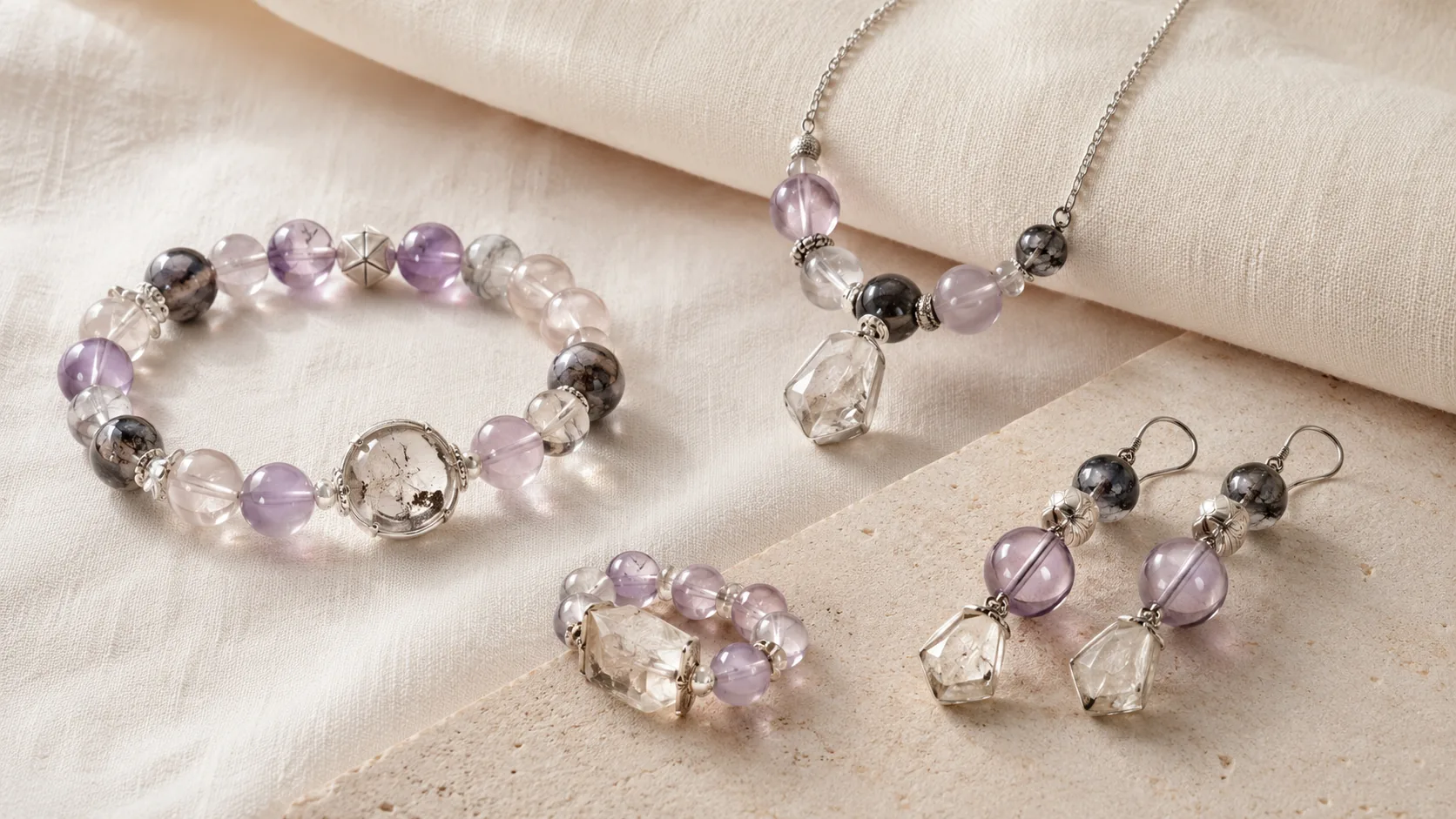
Auralis should not describe every bead simply as “100% natural” without supporting information. The product description should identify the known material direction, disclose known or suspected treatments and clearly distinguish natural, laboratory-grown, imitation and uncertain materials.
Material Terms
These terms are not interchangeable. The wording used for a quotation should match the information available for the specific material.
Formed in nature, then cut, polished and drilled for jewelry. Natural origin does not automatically mean untreated or individually laboratory tested.
A natural or other gem material whose color, clarity or appearance has been altered by a process such as heating, dyeing, coating, filling, irradiation or impregnation.
Produced in a laboratory and sharing key chemical, optical and physical characteristics with a natural counterpart. Its laboratory origin must be made clear.
A different material chosen to resemble another gem. It may be glass, resin, another mineral or a composite and should not be presented as the gem it imitates.
Made from two or more joined components. The description should not imply that the complete item is a single untreated natural stone.
When origin or treatment cannot be confirmed, the uncertainty should be stated. Auralis should not upgrade an uncertain description into a definite natural or untreated claim.
Auralis Disclosure Process
Confirm the trade name, color direction, bead size, metal parts and available supplier information for the proposed design.
State treatments or uncertainty when they may affect appearance, durability, care or value. Do not describe a material as untreated when that has not been verified.
Explain that color, transparency, texture, pattern and inclusions can differ from photographs and from bead to bead.
Confirm nominal bead size, bracelet size, metal components and any material-specific care note before the order proceeds.
Do not use “GIA-certified,” “lab certified” or similar wording unless a valid report applies to that specific stone or item and can be reviewed.
When testing is requested, feasibility, laboratory choice, cost, timing and the exact item to be tested must be confirmed separately.
What Customers Should Expect
| Item | What may vary | What Auralis should confirm |
|---|---|---|
| Color | Natural variation, lighting, camera and screen differences. | General color direction and available material photos. |
| Clarity & inclusions | Clouds, internal features, surface texture and transparency. | Expected appearance range; no promise of perfectly identical beads. |
| Bead diameter | Small differences from polishing, drilling and material shape. | Nominal bead size used for the quote. |
| Metal accessories | Alloy, plating, finish and care requirements. | Known metal description and whether special care applies. |
| Treatment status | Some treatments are difficult to identify visually. | Known, suspected or uncertain treatment information. |
| Laboratory reports | Not automatically included with every bracelet or bead. | Whether a specific report exists or testing is separately requested. |
Before Choosing a Bracelet
The same trade name can cover materials with different color, clarity, treatment, bead size, accessories and price. Send the design or reference photo you are considering so Auralis can discuss the specific material direction.
Independent References
FAQ
No. Natural mineral materials can vary in color, transparency, pattern and inclusions. Lighting, camera settings and screens can also change how colors appear. The exact material direction should be confirmed before production or shipment.
No. Auralis should only use a laboratory or certification claim when a valid report applies to the specific item. A product description is not a substitute for independent gemological testing.
Known or reasonably suspected treatments should be disclosed before the order is confirmed, especially when they affect appearance, care or value. If information is uncertain, the uncertainty should be stated rather than presenting the material as untreated.
You may ask before ordering. Feasibility, laboratory choice, cost, timing and whether testing is appropriate for the specific material must be confirmed separately before payment.
Bracelet bead sizes are normally described by nominal diameter. Small variation can occur because of polishing, drilling and natural material differences. Final specifications should be confirmed with the quote.
Avoid strong impact, prolonged chemical exposure and unnecessary moisture. Material-specific care may differ, particularly for dyed, coated, filled, porous or softer materials, so follow any care note supplied with the design.
Reviewed and updated: July 24, 2026.
Ask Before You Order
Auralis can review the known material direction, bead size, accessories, treatment information and price before payment.
Evidence & Standards
Pricing, revisions, deposit, production, bead-size references and sizing inputs.
Open specificationsMaterial name, treatment uncertainty, natural variation and care.
Review materialsHow Auralis separates confirmed facts, references and order-specific details.
View standards